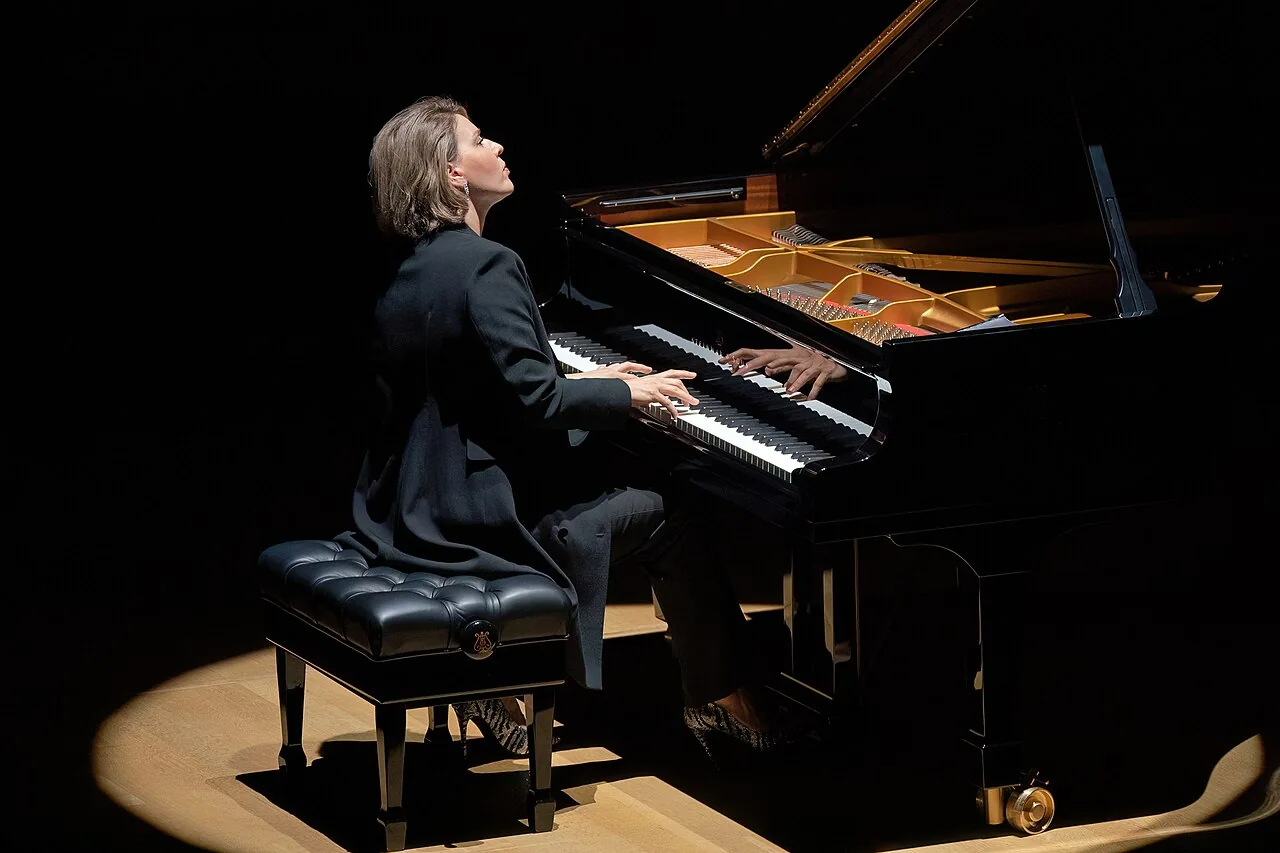
Polina Osetinskaya plays Bach with the Singapore Symphony Orchestra
Polina Osetinskaya's February 2026 Bach programme, with the published conductor change, complete work list, concert times and ticket prices.

Key points
- Polina Osetinskaya plays two Bach concertos with the Singapore Symphony Orchestra (SSO) at Victoria Concert Hall on 13 and 14 February 2026, at 7.30pm.
- The updated conductor is Gábor Takács-Nagy, replacing Mario Venzago, who withdrew for health reasons.
- The 13 February programme update puts Bach’s F minor concerto before the D minor concerto. Schumann’s Second Symphony follows the interval.
- Standard tickets are S$15, S$30, S$40, S$55, S$75 and S$100, before booking fees.
- The listed duration is one hour and 50 minutes, including a 20-minute interval, with a recommendation for ages seven and above.
Could two Bach concertos make an interesting family evening?
If your child knows Johann Sebastian Bach through a piece in their piano book, hearing a pianist play his music with an orchestra offers another way to listen. A concerto combines a solo instrument with an ensemble, so the piano is part of a larger performance.
Osetinskaya’s February programme includes two Bach concertos before a symphony by Robert Schumann. It gives a family the chance to compare two works by the same composer while also hearing music without the piano soloist.
This guide sets out the published programme and practical details. It also records the organiser’s updates, which matter if you are comparing an earlier advertisement with the final event listing.
The aim is to help you decide whether this kind of concert would suit your child or your own listening interests. It is based on the listing, rather than an account of how the performers played.
What is the complete published programme?
The updated Singapore Symphony Orchestra event page lists:
- Johann Sebastian Bach: Concerto No. 5 in F minor, BWV 1056, with Polina Osetinskaya as soloist.
- Johann Sebastian Bach: Concerto No. 1 in D minor, BWV 1052, with Polina Osetinskaya as soloist.
- Intermission.
- Robert Schumann: Symphony No. 2 in C major, Op. 61.
These are all the works named in the published programme. The letters and numbers after the Bach titles are catalogue identifiers, which help you distinguish the works when looking for a recording.
If your child wants to listen beforehand, use the full title or catalogue number when searching. That avoids choosing a different concerto simply because it has the same composer or a similar name.
You might hear a little of each Bach work together and ask which one your child would like to return to. There is no need to learn a whole programme before going to a concert.
What changed in the announcement?
The SSO says Mario Venzago was unable to conduct for health reasons and Gábor Takács-Nagy stepped in. The replacement-conductor notice said the programme itself was unchanged.
A separate update dated 13 February changed the Bach running order, putting No. 5 before No. 1. Those are different changes: one concerns the conductor, while the other concerns the sequence of the music.
If you saved an early poster, use the updated event page to check the names and order. The original conductor’s name still appears in the page’s web address, which is another reason to read the listing itself.
No part of that notice tells us how the change affected the performance. It would be speculation to describe the players’ response or the audience’s reaction without a report that supports it.
How could you plan the visit and talk afterwards?
Both performances begin at 7.30pm at Victoria Concert Hall, on Friday, 13 February and Saturday, 14 February. Consider the full evening and journey home, rather than planning around the piano music alone.
The published prices are S$15 to S$100 before booking fees. Check the final cost and any concession conditions for the seats you choose, especially if you are arranging tickets for more than one family member.
Before leaving, explain that the piano soloist plays in the Bach works and the orchestra continues with Schumann after the interval. That simple outline may be all your child wants to know in advance.
Afterwards, you could ask whether they preferred hearing the piano with the orchestra or the orchestra on its own. Let their answer help you choose another programme, without requiring a technical explanation or treating the outing as a lesson to be marked.